Coffee or Tea Cup with Cakes and Spoon
As someone who’s stitched hundreds of designs across apparel, home goods, and boutique merchandise, I opened Coffee or Tea Cup with Cakes and Spoon expecting charm—and got something more practical: a quietly versatile silhouette that lands just right between cozy and polished. It’s not fussy, not overly detailed, and doesn’t try to be three things at once. That’s rare in food-themed embroidery graphics, where cluttered teacups and over-rendered pastries often fall apart under thread.
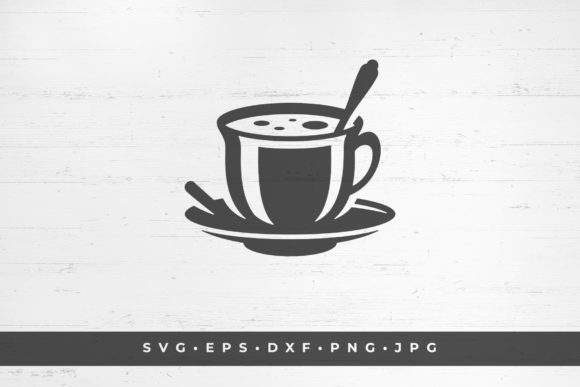
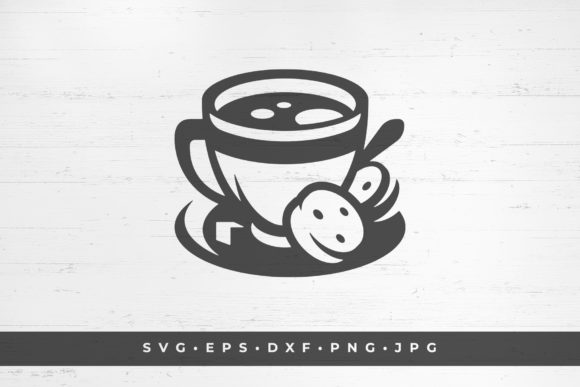
I tested it first on a linen tea towel—medium-weight, natural fiber, minimal stretch. Hooped with medium tear-away stabilizer, the design stitched cleanly at roughly 3.5 inches wide. The spoon curves gently, the cup has soft but defined contours, and the cakes sit close enough to read as a group without merging into a blob. No tiny stems, no delicate icing lines—just confident negative space and balanced proportions. That simplicity is its strength: it reads instantly, even at small scales, and holds up beautifully in satin stitch or dense fill.
For real-world use, this isn’t a “just add water” design—it’s one that earns its place. Last week, I used Coffee or Tea Cup with Cakes and Spoon on a set of organic cotton baby onesies for a local café’s newborn gift bundle. We chose soft heather grey fabric and stitched in cream and warm taupe thread. The result? A gentle, gender-neutral motif that felt handmade—not clip-art. Parents responded immediately: “It’s sweet but not cutesy,” one told me. That’s the quiet power of thoughtful illustration translated well into embroidery file form.
This design shines brightest on items where warmth and intention matter: embroidered tote bags for bakeries, aprons for coffee roasters, pillow covers for cozy reading nooks, and kitchen towels sold at craft fairs. It works especially well as an embroidered patch—clean edges hold up after washing, and the shape fits standard 3–4 inch hoops without awkward cropping. On sweatshirt embroidery, it anchors nicely above a pocket or centered on the chest. For custom apparel, pair it with minimalist fonts or let it stand alone. Its silhouette-based nature means it avoids the pitfalls of photorealistic food graphics—no muddy gradients, no thread-hogging shadows, no detail lost in dense stitching.
That said, Coffee or Tea Cup with Cakes and Spoon needs thoughtful placement. Avoid using it on highly textured fabrics like bouclé or thick terry cloth without extra stabilizing—it’s clean-lined, not rugged. On stretchy knits (think lightweight t-shirts or baby bodysuits), always test with cutaway stabilizer and basting stitches first; the cup’s base and spoon handle can distort if tension isn’t dialed in. Dark fabrics demand high-contrast thread—cream or light grey pops, but pale yellow may disappear. And while it’s great for caps, keep it front-and-center: the curved surface compresses fine details, so avoid placing it too close to the bill seam unless you’ve verified hoop clearance.
Where it truly elevates a project is in perceived value. Unlike generic coffee icons, this design carries narrative weight—a pause, a shared moment, a little luxury. That translates directly to customer trust and giftability. An Etsy seller told me she added it to her holiday “cozy kitchen” collection and saw a 30% lift in average order value—customers bundled the embroidered tea towel with matching oven mitts and a handwritten recipe card. That’s not just about the graphic; it’s about how Coffee or Tea Cup with Cakes and Spoon invites storytelling.
As a machine embroidery design, it behaves predictably. No overlapping paths, no nested elements that confuse auto-digitizing software. The SVG and EPS files scale cleanly for resizing, and the PNG version works reliably for digitizing your own version if needed. Because it’s categorized under Illustrations and Graphics, it’s clearly intended as a foundational asset—not a finished layout—but that’s exactly what makes it flexible for commercial embroidery, printable mockups, or digital product previews.
A few must-do checks before stitching your first run:
- Test on scrap fabric—especially if using textured, dark, or stretchy material.
- Review stitch density in your embroidery software; adjust fill angles if needed for smoother coverage on low-thread-count fabrics.
- Confirm hoop size compatibility; this design fits comfortably in 4×4 and 5×7 hoops, but verify before hooping expensive garments.
- Inspect small details at actual stitch size—the spoon tip and cake tops should remain distinct, not merge into a single blob.
- Try black-and-white mockups to assess contrast and legibility before committing to thread colors.
- Use proper stabilizer—medium tear-away for stable wovens, cutaway for knits, and fusible for lightweight linens.
- Verify licensing before selling finished products or bundling the digital embroidery file—this is essential for Etsy sellers and craft businesses.
One last note: Coffee or Tea Cup with Cakes and Spoon doesn’t shout. It doesn’t need to. In a market flooded with loud, trend-chasing graphics, its quiet confidence makes it memorable. It feels handmade because it’s designed to *be* handmade—not mass-produced, not over-optimized, but considered. Whether you’re embroidering a wedding gift for a barista couple, branding a new café’s staff aprons, or building a cohesive line of small shop products, this design supports your voice instead of competing with it.
If you’re evaluating it for your next embroidery project, ask yourself: Does it feel like something your ideal customer would choose—not just tolerate, but cherish? For me, the answer was yes. Not because it’s perfect, but because it’s purpose-built: simple enough to stitch flawlessly, expressive enough to mean something, and timeless enough to stay relevant long after this season’s trends fade.