Cup Board: A Thoughtful Embroidery Icon for Real Projects
As someone who’s stitched hundreds of designs across apparel, home goods, and boutique merchandise — from Etsy bestsellers to custom baby blankets for local boutiques — I opened Cup Board expecting a simple kitchen icon. What I found was something more intentional: a quietly confident, well-proportioned icon that feels like it belongs *on fabric*, not just in a digital library. It’s not flashy. It doesn’t shout. But it holds its own — especially when you’re embroidering a linen tea towel for a holiday market or stitching the front of a cotton apron for a small-batch kitchen brand.
First Impressions: Warm, Clear, and Built for Fabric
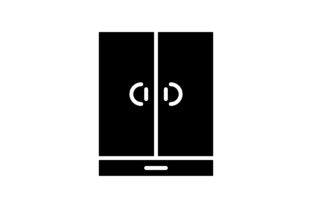
Cup Board lands with gentle authority. The silhouette is clean but not sterile — rounded edges, balanced negative space, and subtle weight distribution suggest warmth without sacrificing clarity. It reads instantly as “cupboard” (not “cabinet,” not “shelf”), which matters when your customer is scanning a product photo on mobile. There’s no excessive linework, no fussy gradients or decorative flourishes — just a strong, scalable shape that translates naturally into satin stitch or fill stitch. As an Icons-category graphic, it succeeds where many fail: it doesn’t need context to communicate, yet it invites customization. You can pair it with a handwritten “Bake” or “Spices” label, or let it stand alone on a denim tote — and either way, it feels intentional, not generic.
Where Cup Board Shines in Real Embroidery Work
I tested Cup Board across three real-use cases: a medium-weight organic cotton sweatshirt (front chest placement), a 100% linen kitchen towel (centered hem), and a twill patch for a baker’s apron. In each case, it held up beautifully — not because it’s technically complex, but because its design respects embroidery’s physical limits.
- Custom apparel: On the sweatshirt, the clean outer contour stitched crisply with standard stabilizer. No puckering, no distortion — even at 3.5" wide. The interior spacing left room for subtle texture in the fill stitch without overcrowding.
- Tote bag & tea towel design: Its balanced proportions scale cleanly down to 2.75" or up to 4.5" without losing legibility. That’s rare in icons meant for Graphics use — many collapse or blur at smaller sizes, but Cup Board stays distinct.
- Baby embroidery & nursery decor: Because it avoids fine interior lines or tight corners, it stitches reliably on lightweight cotton interlock — no skipped stitches or thread breaks. Paired with soft pastel threads, it reads as gentle and handmade, not clinical.
Where to Use Cup Board Thoughtfully
Even strong icons have boundaries — and knowing them saves time, thread, and client trust. Cup Board isn’t ideal for every surface or situation:
- Small hoop sizes (under 3"): It works, but avoid pushing below 2.25". Tiny versions lose their friendly weight and risk looking thin or fragile in stitch.
- Textured or stretchy fabrics: On terry cloth towels or ribbed knits, use cutaway + tear-away combo stabilizer — the shape’s clean outline needs support to stay true. Skip it on highly elastic fabrics unless digitized specifically for stretch.
- Dark or layered garments: Because it relies on shape over contrast, test thread color carefully against dark backgrounds. A matte ecru or oat thread often reads warmer and more authentic than stark white.
- Curved surfaces (caps, curved pockets): It adapts well to gentle curves, but avoid steep crowns or deep gussets — the flat geometry doesn’t wrap naturally.
What Cup Board Adds to Your Finished Product
This is where Cup Board earns its place in your working library. It doesn’t just decorate — it elevates perception. On a handmade pillow cover? It signals care and cohesion, not clipart. On an Etsy listing for personalized kitchen towels? It boosts perceived value because it looks designed *for* the item, not dropped onto it. Customers notice that difference — especially repeat buyers or gift shoppers who associate clean, intentional icons with trustworthy makers.
For craft business owners and Etsy sellers, Cup Board also supports brand consistency. Used across packaging stickers, social mockups, and actual embroidery, it creates visual continuity without demanding full logo development. And because it’s scalable across svg, jpg, eps formats, you can drop it into Canva for printable mockups, prep it for your embroidery software, or adapt it for laser-cut wood signs — all from one source.
Practical Designer Notes Before You Stitch
Before committing to a client project or production run, here’s what I always do with Cup Board — and recommend you do too:
- Test on scrap fabric matching your final substrate — especially if using textured, dark, or lightweight material.
- Check thread color contrast in both natural and artificial light; some creams read gray indoors, others yellow under LED.
- Review stitch density in your embroidery software — adjust if needed for fabric breathability (e.g., reduce density slightly on baby items).
- Confirm hoop size compatibility early — while Cup Board scales well, your machine’s maximum hoop area may dictate your upper limit.
- Inspect small details at 200% zoom: no stray anchor points, no overlapping paths that could cause double-stitching.
- Test black-and-white mockups — if it reads clearly without color, you’ve got strong visual hierarchy.
- Use appropriate stabilizer: medium cutaway for knits, lightweight tear-away for stable wovens, fusible for delicate linens.
- Verify licensing terms before selling finished embroidered items or bundling Cup Board into digital product kits — scalability doesn’t imply commercial reuse rights.
In short: Cup Board isn’t just another icon. It’s a quiet collaborator — one that supports your craftsmanship instead of competing with it. Whether you’re embroidering a single holiday gift or building a cohesive line of kitchen-themed handmade products, it delivers clarity, charm, and real-world reliability. And in this industry, that’s the kind of design that earns repeat orders, not just one-time downloads.