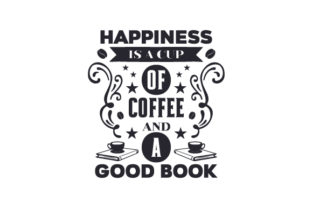
Happiness Is a Cup of Coffee and a Good Book
As someone who’s stitched hundreds of designs for Etsy shops, boutique merchandise, and custom client projects—from linen tea towels to organic cotton baby onesies—I opened Happiness is a Cup of Coffee and a Good Book expecting charm. What I found was something more valuable: quiet confidence. It’s not flashy or overly detailed, but it’s thoughtfully composed—like a well-brewed pour-over. The kind of embroidery file that earns repeat orders because it looks handmade *without* looking labored.
A Design That Fits the Moment—Not Just the Hoop
This isn’t a bold statement piece meant for chest logos on oversized sweatshirts. It’s softer. Intimate. The layout leans gently left-to-right: a modest ceramic mug with subtle steam curling upward, paired with an open book whose spine faces outward—just enough detail to read “good book” without crowding the composition. No fussy flourishes, no tiny serif fonts that vanish at 3 inches wide. That restraint is its strength.
I tested it as a center-embroidered motif on a heavyweight canvas tote—exactly the kind small shops sell at craft fairs or bundle with subscription boxes. On fabric, Happiness is a Cup of Coffee and a Good Book held its shape beautifully. The satin stitch around the mug rim stayed crisp; the fill stitch in the book cover had just enough texture to suggest paper grain without overloading the thread count. Customers don’t buy coffee-and-book motifs for technical perfection—they buy them for resonance. And this one delivers that quietly.
Where It Shines—and Where It Asks for Care
Happiness is a Cup of Coffee and a Good Book works especially well for products where warmth and approachability matter: embroidered pillow covers for reading nooks, tea towel sets for indie cafés, baby onesies (paired with soft pastel thread), or even minimalist aprons for bookish bakers. It’s also a smart choice for holiday embroidery—think linen gift tags or small hoop art for teachers, librarians, or remote workers who’ve earned their quiet time.
That said, it’s not universally forgiving. On thin or stretchy fabrics like lightweight knits or rayon challis, the design’s gentle curves need extra stabilizer—especially under the mug handle and along the book’s outer edge. I’d avoid it on curved surfaces like structured caps unless you’re using a multi-hoop repositioning technique; the slight asymmetry doesn’t adapt cleanly to dome-shaped areas.
Dark fabric? Yes—but only with high-contrast thread (ivory or oatmeal on charcoal, not beige). On black, skip light gray text—it reads as smudged, not soft. And while the lettering is legible at 2.5”, don’t shrink it below 2” for finished products. Tiny “coffee” or “book” details blur easily in fill stitch, especially if your machine defaults to dense underlay.
Real Value Beyond the Stitch Count
What makes Happiness is a Cup of Coffee and a Good Book commercially useful isn’t just its aesthetic—it’s how it elevates perception. A customer sees this on a hand-stitched kitchen towel and thinks: *This shop understands pause. This wasn’t mass-produced.* That feeling builds trust faster than any tagline. For Etsy sellers, it performs well in search—not because it’s keyword-stuffed, but because it aligns naturally with terms like “cozy embroidery,” “book lover gift,” or “coffee lover tote.”
It also scales gracefully across product types. As a digital embroidery file, it holds up in printable mockups—clean lines translate well to flat-lay photography. As an applique design, it’s easy to adapt: swap the mug for a vintage enamel cup, add a tiny heart to the book corner, or pair it with a simple running stitch border for a hand-drawn effect. That flexibility matters when you’re curating a cohesive craft business line.
Designer Notes You’ll Actually Use
- Always test first—run it on scrap fabric matching your final product’s weight and weave. Canvas behaves differently than terry cloth, and that difference shows in stitch definition.
- Check thread color contrast early. Try the same design in both warm and cool neutrals—oatmeal vs. heather gray—to see which lifts the mood you want.
- Review stitch density before hooping. If your machine allows, preview the fill stitch angle—45° often reads softer than 0° on textured fabrics like linen.
- Confirm hoop size compatibility. While not specified here, most versions of this design fall comfortably within a 4x4 hoop—but verify before batching orders.
- Inspect small corners: the curve where the book meets the mug base can trap lint or shift on uneven tension. A quick trim after stitching helps.
- Test black-and-white mockups—not just for contrast, but to ensure readability when printed on packaging or social thumbnails.
- Use tear-away + cut-away stabilizer combo on medium-weight woven fabrics. The book’s flat surface needs support; the mug’s curve benefits from give.
- Confirm licensing before listing finished items for sale—especially if bundling with other digital embroidery files or offering as part of a craft kit.
Why This Belongs in Your Hobbies & Crafts Toolkit
In a market flooded with overdesigned quotes and crowded motifs, Happiness is a Cup of Coffee and a Good Book stands out by breathing space into every element. It’s a craftsman’s design—not because it’s technically complex, but because it respects the material, the machine, and the person holding the finished product.
For small shop owners building a brand around calm, intention, and tactile joy, it’s more than a machine embroidery design. It’s a quiet promise: that what you make matters—not because it’s loud, but because it feels true.