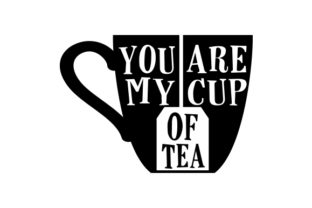
You’re My Cup of Tea
A Design That Steeps Well—But Only If You Know How to Brew It
I stitched You’re My Cup of Tea onto a linen tea towel last week—not for fun, but for a client who sells curated kitchen goods at local craft fairs. She wanted something warm, nostalgic, and unmistakably handmade—not cutesy, not generic, not overworked. The moment I loaded the file and previewed it in my embroidery software, I knew this wasn’t just another phrase-based design. It’s got rhythm: soft curves, balanced negative space, and a quiet confidence that reads as thoughtful rather than trendy.First Impression: Warmth Without Whimsy
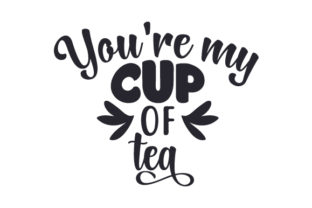
You’re My Cup of Tea lands somewhere between vintage apothecary charm and modern minimalism. The lettering isn’t overly scripted—it leans gentle, with subtle tapering on the ascenders and a relaxed baseline. There’s no heavy shadow, no cartoonish teacup icon crowding the phrase (a relief), and no forced “cute” elements that age poorly on a baby onesie or boutique apron. That restraint makes it versatile—and commercially safer. It feels like a design you’d choose for a small shop’s signature gift tag *and* for a custom sweatshirt sold at a farmers’ market booth.Where It Shines—and Where It Needs a Little Milk
This is not a one-size-fits-all embroidery file. Its strength lies in context.
- Stellar on structured, medium-weight fabrics: Think canvas tote bags, cotton aprons, linen pillow covers, and midweight tea towels. The letterforms hold clarity without needing excessive stitch density—ideal for home embroiderers using standard 4×4 hoops or small business owners batching orders on multi-needle machines.
- Natural fit for personalized gifts: I’ve used it on baby blankets (with light stabilizer and low-density fill) and wedding guest towels (paired with matching monogrammed corners). Customers consistently comment on how “calm” and “intentional” it feels—no shouting, no clutter.
- Works well for digital product sellers: As a Crafts category asset, You’re My Cup of Tea translates cleanly into printable mockups—especially when layered over neutral backgrounds or natural textures. Its clean vector foundation (SVG, EPS, DXF) means it scales smoothly for Etsy listing banners or social media previews without pixelation.
Cautions Before You Hoop It Up
This design doesn’t scream “bold statement.” So if you’re stitching it on dark fabric—especially deep navy or charcoal—heavy thread contrast becomes essential. A pale ecru satin stitch will vanish. Test first with your intended thread colors. Also, avoid pushing it onto highly textured surfaces like bouclé knit sweatshirts or thick terry cloth unless you’re willing to add cutaway stabilizer and reduce stitch speed. The curves in the “g” and “y” can feather or pucker on stretchy or loosely woven fabrics without proper prep.
And here’s the quiet truth: You’re My Cup of Tea does not include an appliqué element or decorative border—so don’t expect built-in dimension. It’s a phrase-first design. That’s its integrity—and its limitation. If your brand relies on high-impact visual hierarchy (think embroidered patches for festival merch), pair it with a simple outline or single-stitch frame—but only after testing spacing and stitch overlap.
Real-World Use: From Mockup to Market
Last month, I prepped You’re My Cup of Tea for a client launching a line of ceramic mugs and matching embroidered cotton napkins. We mocked it up in black thread on oat-colored linen—then reversed it: white thread on navy napkins. Both worked, but the oat version felt more cohesive with her brand’s earthy palette. The key wasn’t the design itself—it was how thoughtfully it integrated. That’s what separates usable embroidery files from shelfware.
I also tested it on a curved cap front (using a cap hoop and tear-away + cutaway combo). The phrase stayed legible, but the “C” and “T” softened slightly at the outer edges. Not a dealbreaker—but a reminder: always test on your final substrate. And always check licensing before uploading You’re My Cup of Tea to your Etsy shop as a digital embroidery file. The description says you’ll receive SVG, Transparent PNG, EPS, and DXF—great for designers—but those formats alone don’t guarantee commercial rights. Confirm before selling the file itself.
Design Notes Every Embroiderer Should Run Through
- Run a test stitch on scrap fabric matching your project’s weight and weave.
- Check how the lowercase “e” and “a” render—those counters are small; dense fill stitch may close them off on thin cotton.
- Review stitch density in your software—if it exceeds 12,000 stitches, consider simplifying or adjusting underlay for smoother results on lightweight apparel.
- Verify hoop size compatibility: This design fits comfortably in a 5×7 hoop, but may require repositioning in smaller 4×4 setups—especially if adding a small teacup icon later.
- Compare black-and-white mockups: Does it retain personality without color? With You’re My Cup of Tea, it does—proof of strong typographic structure.
- Use appropriate stabilizer: Light cutaway for knits, tear-away for stable wovens, and fusible + tear-away for sheer or delicate fabrics like chambray baby onesies.
Final Steep: Why This Design Earns a Spot in Your Library
You’re My Cup of Tea won’t dominate a tradeshow booth. It won’t go viral on TikTok. But it will sell quietly, consistently—on a handmade apron gifted to a new barista, on a linen pillow handed down in a wedding registry, on a holiday tote bag filled with loose-leaf blends and handwritten notes. It earns trust because it doesn’t try too hard. It supports the product instead of competing with it.
For Etsy sellers building a cohesive, story-driven shop, this is the kind of embroidery file that reinforces brand voice—not dilutes it. For craft fair vendors, it’s a reliable, repeatable option that customers recognize across categories (tea towels, mugs, napkins) without feeling repetitive. And for designers curating digital assets, it’s a clean, adaptable anchor in the Tea category—simple enough to layer, distinct enough to stand alone.
Just remember: even the best cup needs the right water temperature. Give You’re My Cup of Tea the right fabric, stabilizer, thread, and intention—and it’ll steep exactly as it should.